
Tempeh vs Tofu: What's the Difference?
Both are made from soya beans. Both in the chilled section. Beyond that, tempeh and tofu are genuinely different products, in how they're made, what they taste like, and what they do for your body. Our co-founder Elin breaks it down on our Instagram too, if you'd rather watch than read. Here's the full breakdown.
Where tempeh and tofu are the same
Both start with soya beans. Both are good sources of plant protein. Both are naturally gluten-free.
How they're made: the key difference
Tofu is made from soy milk. The milk is coagulated and pressed into blocks, similar in principle to making cheese. It's a relatively simple process, and the result is a soft, white, water-rich product with a very mild flavour.
Tempeh is made from whole soya beans that are naturally fermented. The beans are cooked, a natural culture is added and the mixture is left to ferment for 24 to 48 hours. The fermentation binds the beans into a firm, dense block and produces gut-friendly prebiotics in the process.
That fermentation step is what makes the biggest difference, in nutrition, texture and flavour.
Tempeh vs tofu: how the nutrition compares
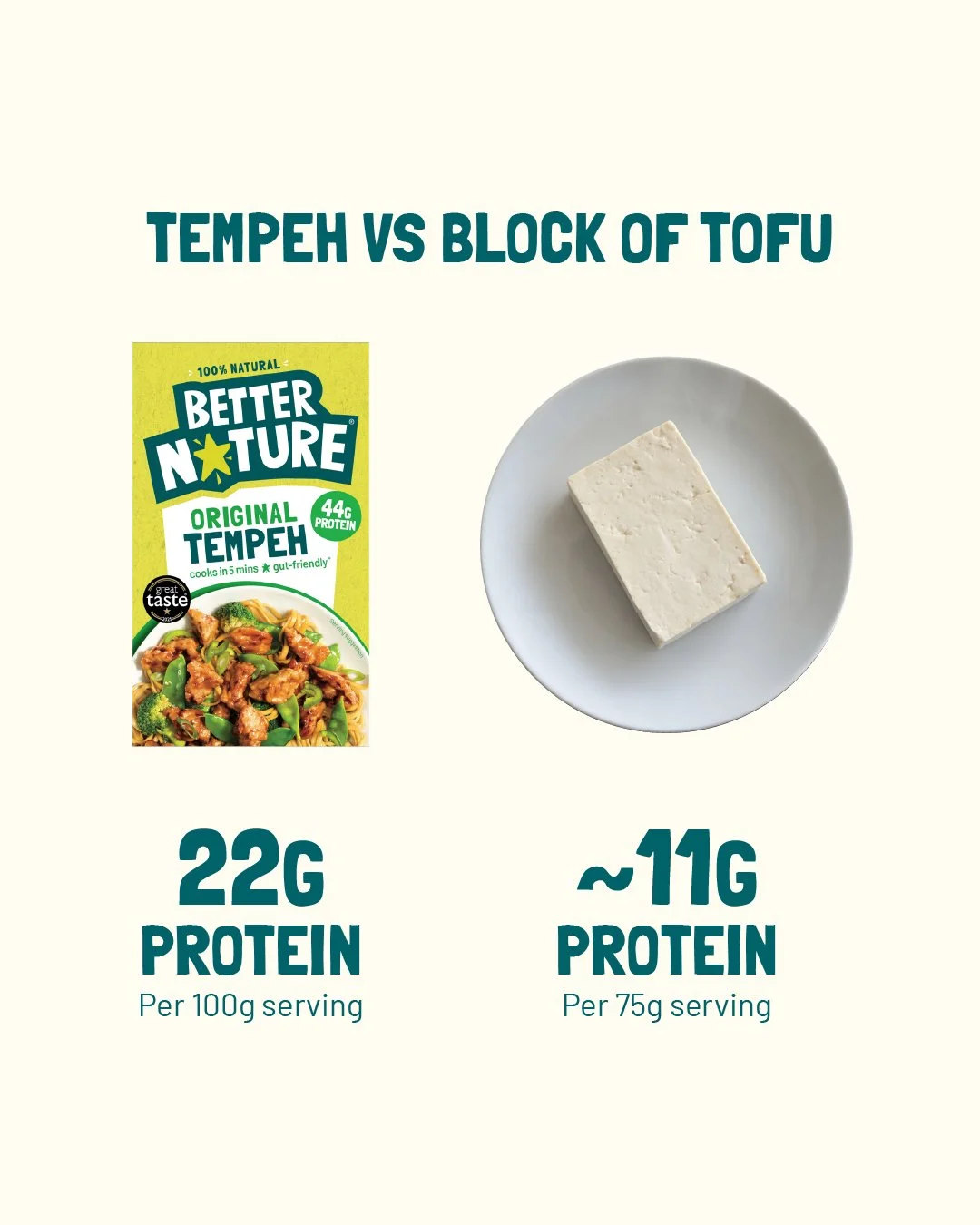
Per 100g, tempeh contains around 20g of protein compared to roughly 8g in tofu, making tempeh significantly higher in protein per gram. A 200g pack of Better Nature tempeh delivers 44g of protein, similar to a chicken breast. Tofu doesn't come close on a serving-for-serving basis. Tempeh is also fermented, which means it comes with gut-friendly prebiotics. Tofu isn't fermented, so it doesn't have that benefit. Both use the whole soya bean and neither is ultra-processed, but tempeh retains the whole bean where tofu is made from the milk only.
Tempeh vs tofu: texture
Tofu comes in silken, soft and firm varieties, but even firm tofu has a fairly delicate texture that can fall apart in the pan. Tempeh is consistently firm and dense. It holds its shape when you slice it, fry it or add it to a sauce.
For anyone trying to cook a proper chicken swap, something that crisps up, holds a marinade and sits in a wrap or bowl without collapsing, tempeh is the more practical option.
Tempeh vs tofu for gut health
This is where the tempeh benefits are clearest. Fermentation produces gut-friendly prebiotics, fibres that feed the beneficial bacteria in your gut. Tofu doesn't go through fermentation so it doesn't have this benefit. Is tempeh good for gut health? Yes, genuinely. It's one of those health benefits that's built into the production process, not added in afterwards.
Which is better for cooking?
Both are versatile but they work differently. Tofu is better for dishes where you want a softer, more neutral protein — silken tofu in smoothies or soups, soft tofu in Asian-style dishes. It needs a lot of help on flavour.
Tempeh is better when you want something that cooks like chicken. Pan-fried, air-fried, marinated, crumbled into a sauce. It has its own flavour and takes seasoning brilliantly. Better Nature's pre-seasoned range — Smoky, Mediterranean, Peri Peri — means you can slice and cook straight from the pack.
The short version
If you want more protein, tempeh wins. If you want gut-friendly prebiotics, tempeh wins. If you want something firm enough to cook like chicken, tempeh wins. If you want something softer and more neutral for blending or lighter dishes, tofu is the better call. Both are solid plant proteins, but for anyone looking to give chicken the night off, tempeh is the more direct swap.
Better Nature tempeh is available in Tesco, Asda and Ocado. B Corp certified and a Great Taste Award 2025 winner.